On Sunday I left Amritsar to come back up into the mountains to McLeod Ganj. Originally a British hill station, it is now the home-way-from-home of the Dalai Lama, and of a sizeable Tibetan community. The town is quite small, and full of western tourists and Budhist monks. It is interesting to look over and see a monk, in red robes, sitting and email1317ing at the computer next to you. I find the Tibetans very engaging and positive.
With some luck, I will get to attend a public audience with His Holiness.
Category: McLeod Ganj
A Day in McLeod Ganj
Thursday:
I awoke early this morning, as I have tended to do since arriving in McLeod Ganj. My room was very cold, so I stayed under the covers with my hot-water bottle. Finally I mustered the nerve to face the day, and went down to order a chai. I drank my tea on the rooftop terrace, which is warm and sunny, and provides a view of the valley and the Himalayan peaks beyond.
Photography
When I first arrived in India, I was hesitant to ask people to let me take their picture. I didn’t want to be the ugly tourist and treat them as objects. If I did decide to take a picture I would ask permission. Most often the response I get is very positive, and even enthusiastic. Older people, who look very serious, will brighten up when I ask. I am finding that it opens the way for many positive interactions.
His Holiness The Dalai Lama
Last week His Holiness the 14th Dalai Lama of Tibet returned from a trip to Japan. This brought the possibility of a public audience. So many people want to meet him, that a private audience is near impossible. The small community of foreign visitors was buzzing the prospect of meeting him.
Triund
On Saturday, a group of six of us went for a trek up the mountain above McLeod to a scenic spot called Triund. It was a nine kilometer hike which brought us up from 1900 meters here in town up to 2800 meters. The group consisted of three German women, two Americans Raj and Lee. We met for breakfast early in the morning. It was quite cold still, and we were all bundled up. Luckily the day was sunny and warm by the time we started out from town.
Ngawa’s Kitchen
McLeod Ganj offers many opportunities to learn things. Last week I went to a Tibetan cooking class. The class is taught by a monk named Ngawa in his small home. The ‘kitchen’ is a table with burners on it wedged in the corner next to the bed. One sits on the bed, while he demonstrates.
I learned how to make “momos”, which are small vegetable-stuffed dumplings much like pot-stickers. I also learned several recipes for Tibetan soup. I am amazed at how simple they are to make. I have added one to my cookbook. Please give it a try and let me know what you think. Thenthuk
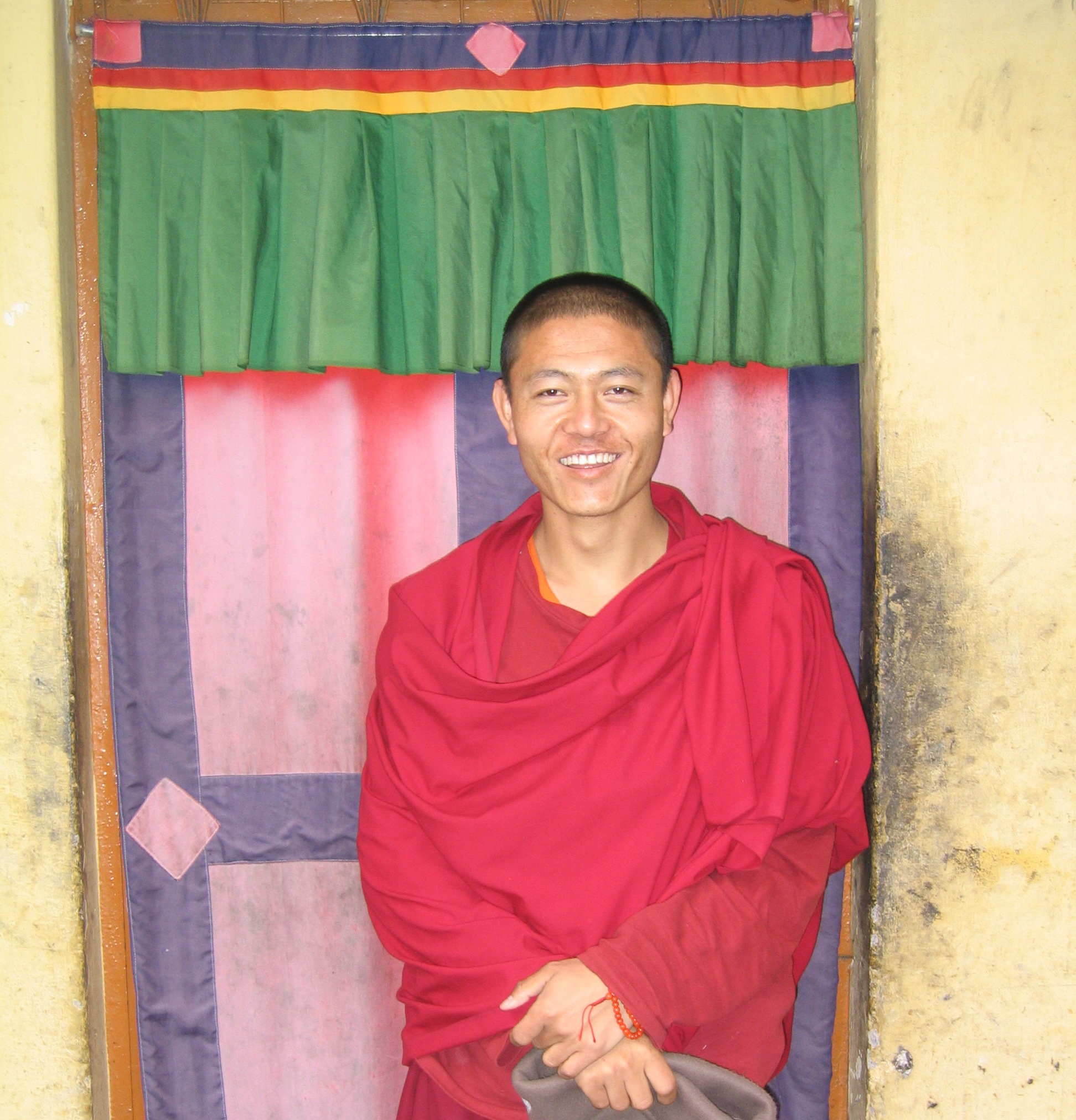
Sonam
My roommate Sonam. He has lived in India for 15 years, and has been a monk since the age of 9. Usually he lives at a monastary Mysore in the South. He has come to Dharamsala to study English. On this day he invited me to his monastary to hear a ceremony which involved him chanting most of the day. I snapped a picture of him while he was on a break.
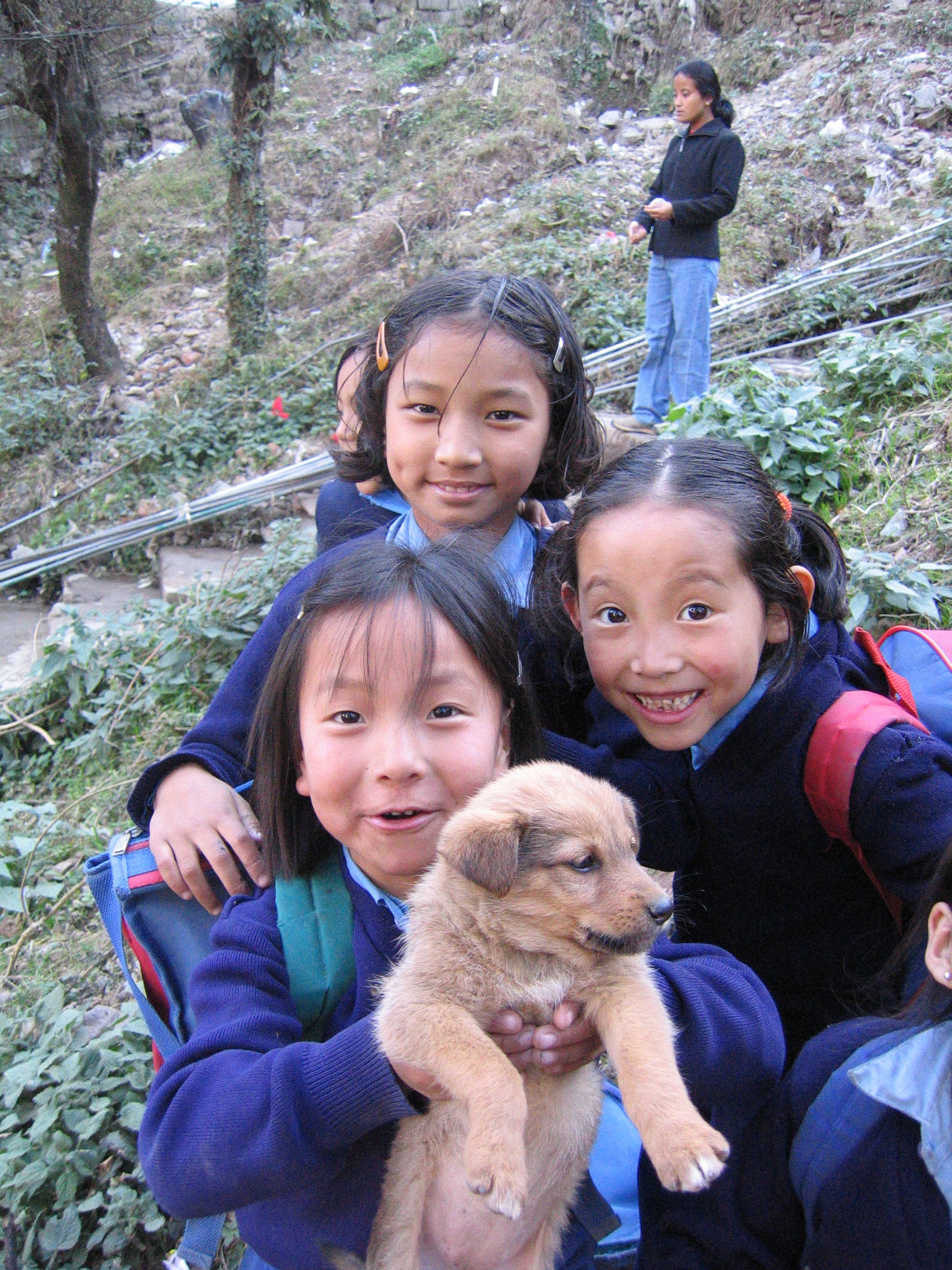
My Neighbors
My room is next to the Tibetan kindergarten. I wake to the sounds of their morning songs around 6:30 in the morning. Again in the afternoon I hear them I hear them singing: today “Old MacDonald” and “Are You Sleeping…” Around 4:00 there is a flood of kids in blue uniforms running everywhere.
Thangka

Thanka painting is traditional art form which dates back to the around the 7th Century. It was originally based on Indian religious art, but it has also incorportated Chinese, Nepalese and Kashmiri styles. Many Thangka paintings feature the Buddha or other dieties or demons.
Thangka is very precise in it the propotions of figures. Those studying this art form spend three years learning these proportions before they even pick up a paint brush.
I got to join a group of students from my old university as they skipped the three year introduction, and got down to painting. The outline of the picture had already been drawn, as is the tradition. The painting deliberately omitted a deity, as it would bring bad luck to paint such a piece incorrectly. This was the result of my 5 hours of effort.
Me at Triund

Proof that I really was in the Himalayas!